Beyond the Dashboard: The Evolution of Enterprise AI
For years, Artificial Intelligence has empowered businesses with unprecedented insights. From sophisticated analytics to predictive modeling, AI has transformed how we understand data, identify trends, and make informed decisions. Yet, for all its prowess in observation and analysis, a critical question lingered: what if AI could do more than just tell us what to do? What if it could actually do it?
This isn’t a hypothetical anymore. We are at the cusp of a profound shift where Enterprise AI is moving beyond static dashboards and reports to actively shaping the physical world. This new wave of AI isn’t just about understanding; it’s about action, execution, and closing the loop between insight and tangible impact.
What Exactly Are Enterprise AI Agents?
Imagine an AI system that doesn’t just suggest a solution but autonomously implements it. That’s the essence of an Enterprise AI Agent. These intelligent agents are sophisticated software entities designed to operate autonomously within enterprise and operational domains. They are goal-oriented, perceptive, and capable of taking actions in complex environments, often interacting with physical systems.
Closing the Loop: From Insight to Execution
The real game-changer with Enterprise AI Agents lies in their ability to close the loop between insight and execution. Traditionally, an AI might analyze production data and suggest an optimal machine setting. A human operator would then receive this insight and manually adjust the machine. With an AI agent, this process becomes seamless:
- Perception: The agent continuously monitors machine performance, sensor data, and production metrics.
- Analysis & Decision: It processes this data, identifies inefficiencies or potential issues, and determines an optimal course of action.
- Execution: The agent then directly interfaces with the machinery or enterprise system to implement the necessary adjustments or interventions, all without human intermediation in routine tasks.
This capability dramatically accelerates workflows, reduces human error, and ensures that insights are translated into immediate, effective actions.
AI on the Factory Floor: A New Era of Industrial Automation
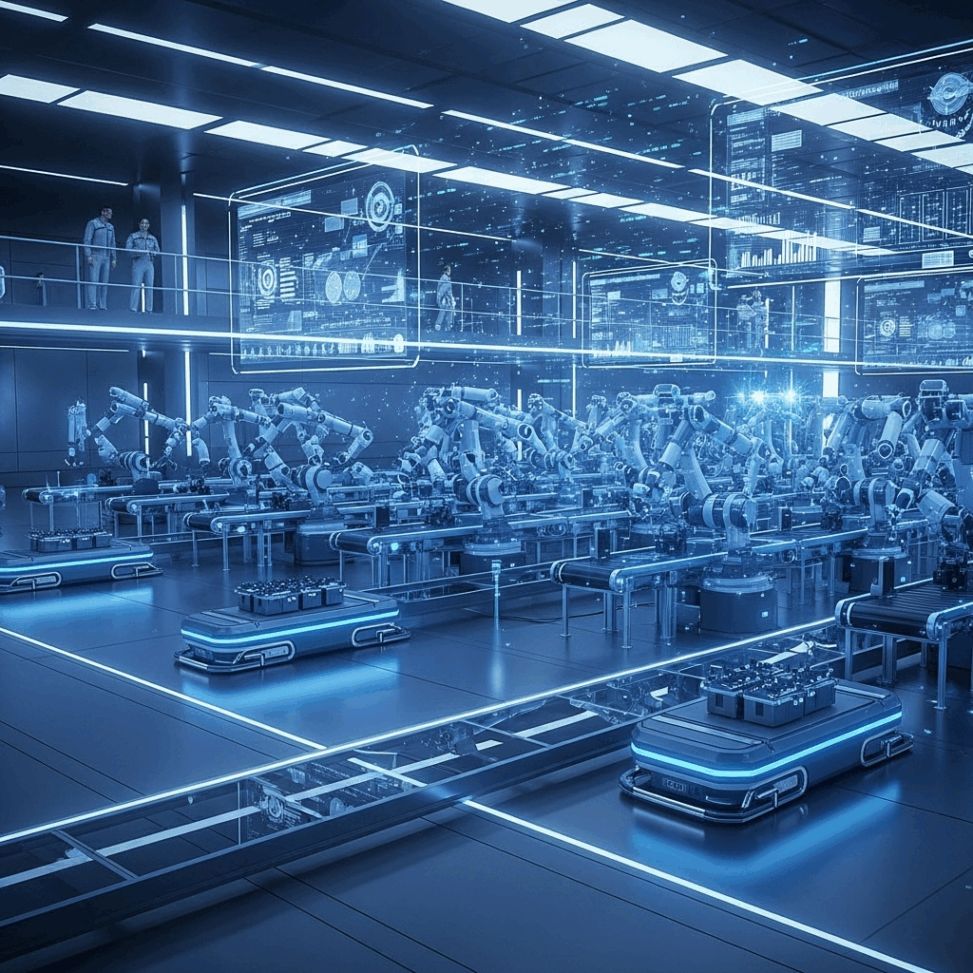
The industrial sector, particularly manufacturing, stands to gain immensely from this evolution. Here’s how Enterprise AI Agents are already reshaping factory floors:
- Predictive Maintenance: Agents can monitor equipment health in real-time, predict failures before they occur, and autonomously schedule maintenance or order parts, minimizing downtime.
- Optimized Production Lines: They can dynamically adjust parameters on assembly lines, balance workloads across machines, and reroute materials to maintain optimal efficiency and quality.
- Automated Quality Control: AI agents can detect defects with precision far beyond human capability, often in milliseconds, and automatically correct the process or flag the faulty product.
- Supply Chain Synchronization: Integrating with broader enterprise systems, agents can optimize logistics, manage inventory levels, and even anticipate demand fluctuations to ensure a smoother supply chain.
These patterns are not just theoretical; they are rapidly becoming a reality. The deployment of physical AI – AI that directly interacts with and manipulates the physical world – is poised to accelerate this shift, making factories smarter, more resilient, and significantly more productive.
The Future is Active: Accelerating Industrial Transformation
The journey of Enterprise AI is far from over. As these intelligent agents become more sophisticated and integrated, they will continue to redefine what’s possible in industrial workflows and beyond. Moving AI beyond mere observation to active participation is not just an incremental improvement; it’s a fundamental transformation that promises to unlock unprecedented levels of efficiency, innovation, and operational excellence for enterprises worldwide.
Leave a Reply