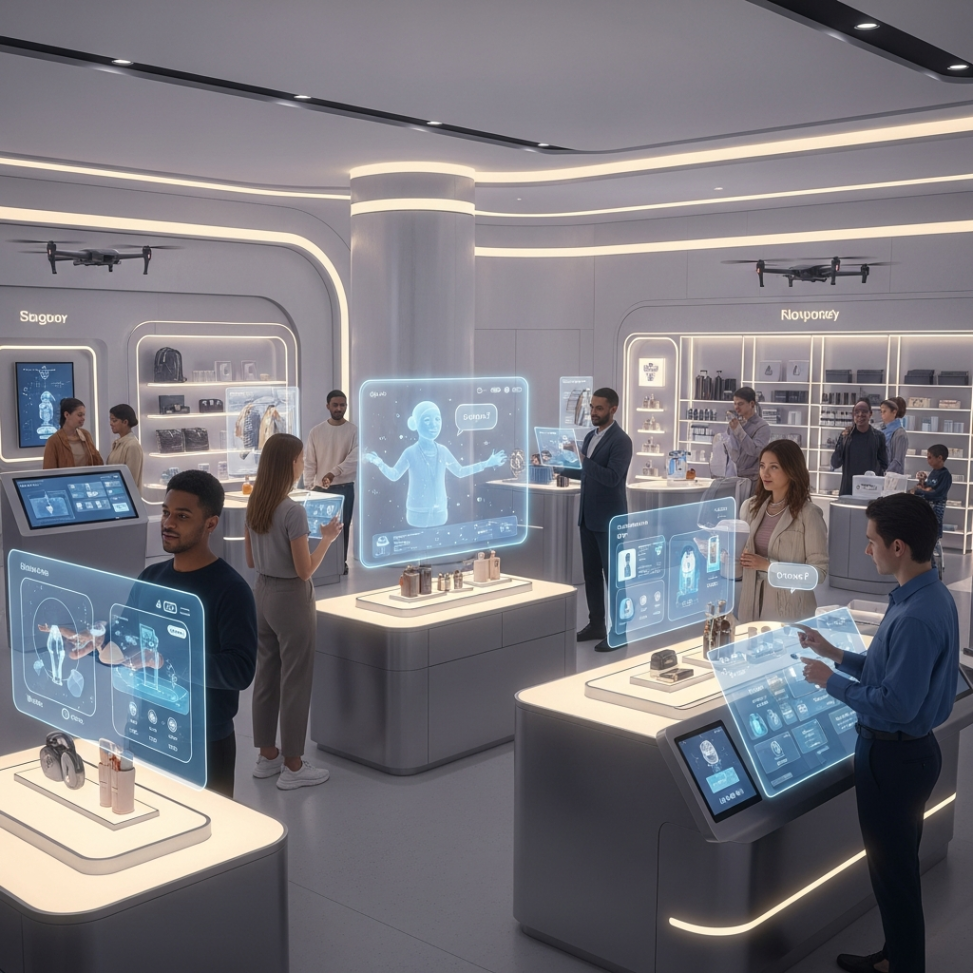
The Future is Now: Strategically Implementing AI in Retail
In the rapidly evolving landscape of modern retail, Artificial Intelligence (AI) is no longer a futuristic concept but a vital tool for staying competitive. However, the biggest mistake retailers often make isn’t ignoring AI, but rather adopting it without a clear purpose. As the saying goes, don’t buy a cool AI tool before you know what problem it will solve.
The year 2026 highlights a critical juncture: successful AI adoption in retail hinges on strategic application, not just technological acquisition. This guide will walk you through 10 impactful AI use cases and provide a practical framework for implementation, ensuring your investments deliver tangible results.
Why a Problem-First Approach to AI is Crucial
Many businesses are drawn to the allure of AI without first identifying specific pain points or opportunities for improvement. This often leads to wasted resources, integration headaches, and ultimately, disillusionment. A problem-first approach ensures that AI solutions are purpose-built to:
- Address operational inefficiencies.
- Enhance customer experiences.
- Optimize decision-making.
- Drive measurable business value.
By focusing on tangible challenges, retailers can select and deploy AI technologies that genuinely transform their operations and customer interactions.
10 Transformative AI Use Cases in Retail
From improving back-end logistics to hyper-personalizing the front-end customer journey, AI offers a vast array of applications. Here are ten key areas where AI is making a significant impact in retail:
- Personalized Customer Experiences: AI-powered recommendation engines analyze browsing history, purchase patterns, and demographics to offer highly relevant product suggestions, leading to increased conversions and customer loyalty. Think of the ‘customers who bought this also bought…’ feature, but far more sophisticated.
- Inventory Optimization and Demand Forecasting: AI algorithms predict future demand with remarkable accuracy by analyzing historical sales, seasonal trends, weather patterns, and even social media sentiment. This minimizes overstocking and understocking, reducing waste and lost sales.
- Supply Chain Efficiency: From predictive maintenance for delivery fleets to optimizing routing and warehousing, AI streamlines every step of the supply chain, reducing costs and improving delivery times.
- Enhanced Customer Service: AI-driven chatbots and virtual assistants handle routine inquiries, process returns, and provide 24/7 support, freeing up human agents for more complex issues. This significantly improves response times and customer satisfaction.
- Fraud Detection and Prevention: AI systems can quickly identify suspicious transactions or behavioral anomalies that indicate potential fraud, protecting both retailers and customers from financial losses.
- Store Operations Optimization: AI can analyze in-store foot traffic patterns, optimize product placement (planograms), and even monitor shelf stock levels in real-time, helping stores run more efficiently and improve the shopping experience.
- Dynamic Pricing Strategies: AI models continuously analyze competitor pricing, demand elasticity, inventory levels, and even time of day to adjust product prices in real-time, maximizing revenue and profit margins.
- Marketing and Sales Automation: AI helps segment customer bases with greater precision, personalize marketing campaigns across channels, and automate outreach, leading to higher engagement and more effective sales funnels.
- Visual Search and Product Discovery: Customers can upload images to find similar products, enhancing product discovery and streamlining the shopping process, especially for fashion and home goods.
- Employee Training and Engagement: AI-powered platforms can deliver personalized training modules, analyze employee performance, and even act as virtual mentors, fostering a more skilled and engaged workforce.
Implementing AI in Retail: A Strategic Guide for Success
Implementing AI successfully requires more than just picking a technology; it demands a structured, strategic approach. Here’s a guide to navigate your AI journey effectively:
1. Define Your Business Problems First
Before looking at any AI solution, clearly articulate the specific business challenges you want to solve. Is it high inventory costs, customer churn, slow delivery, or inefficient in-store operations? A well-defined problem statement will guide your technology selection and implementation.
2. Start Small and Scale
Don’t attempt a massive, company-wide AI overhaul from day one. Begin with pilot projects that address a critical problem in a limited scope. This allows you to test, learn, and demonstrate value before scaling to other areas of the business.
3. Prioritize Data Collection and Quality
AI thrives on data. Ensure you have robust systems for collecting, storing, and processing high-quality, relevant data. Data governance, privacy, and accuracy are paramount for the effectiveness of any AI model.
4. Choose the Right Technology and Partners
Evaluate AI platforms and vendors based on their ability to solve your specific problems, their integration capabilities with existing systems, and their proven track record. Consider both off-the-shelf solutions and custom-built applications.
5. Focus on Measurable Outcomes and ROI
Establish clear Key Performance Indicators (KPIs) before implementation. How will you measure success? Whether it’s increased sales, reduced costs, improved customer satisfaction scores, or enhanced efficiency, ensure your AI initiatives are tied to tangible business outcomes.
6. Foster a Culture of Innovation and Learning
Successful AI adoption requires more than just technology; it needs people. Train your teams, encourage experimentation, and create an environment where continuous learning and adaptation are celebrated. AI is an evolving field, and your organization should be too.
The Road Ahead: AI as a Retail Game-Changer
The retail industry is undergoing a profound transformation, and AI is at the forefront of this revolution. By adopting a strategic, problem-solving mindset and leveraging the diverse capabilities of AI, retailers can unlock unprecedented levels of efficiency, deliver unparalleled customer experiences, and build a resilient, future-ready business. The journey to smart retail in 2026 and beyond begins with a clear vision and a commitment to strategic AI implementation.
Leave a Reply