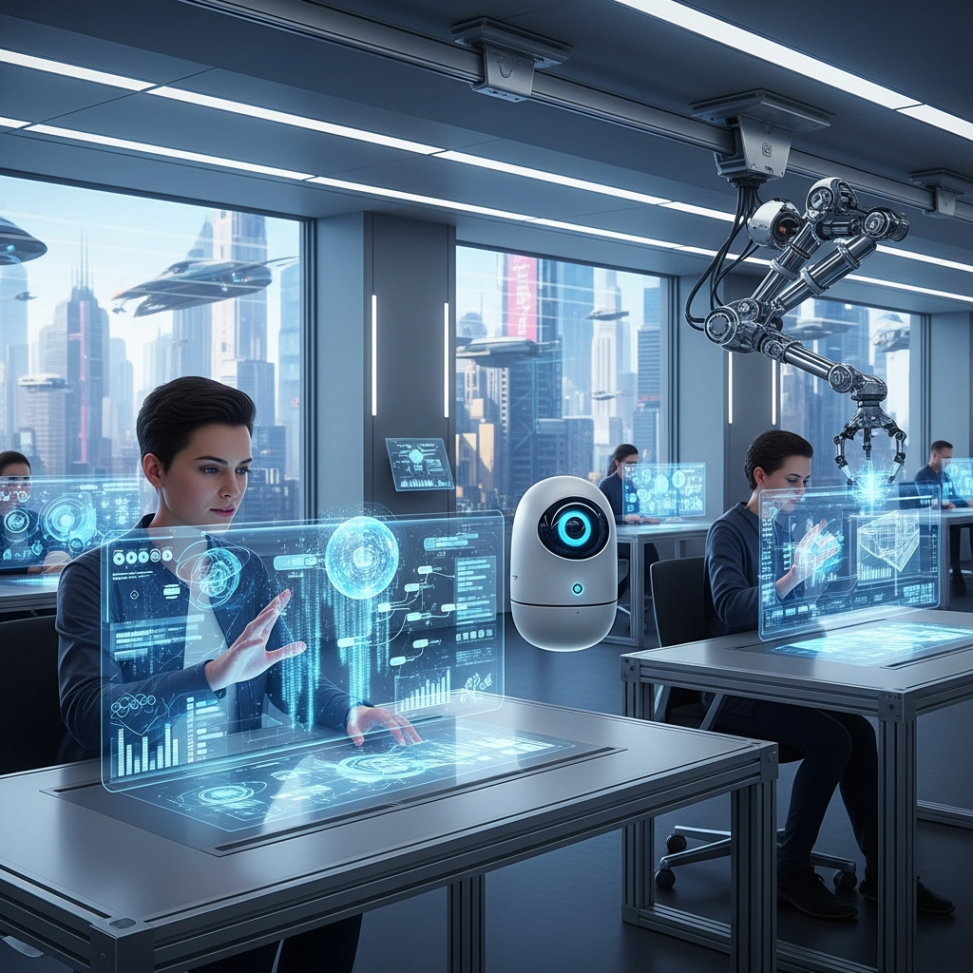
The Rise of Autonomous AI Agents in the Workplace
The landscape of technology and work is undergoing a profound transformation, driven by the rapid evolution of Artificial Intelligence, particularly in the realm of AI agents and automation. These sophisticated systems are no longer confined to sci-fi narratives; they are actively shaping our daily work lives, making decisions, and optimizing processes at an unprecedented pace.
By 2028, agentic AI systems are projected to autonomously make at least 15% of routine workplace decisions. This marks a significant leap from virtually zero in 2024, indicating a foundational shift in how businesses operate and how tech professionals will contribute. This isn’t just about simple task automation; it’s about AI systems performing complex, multi-step operations, learning from data, and adapting their strategies.
What Are Agentic AI Systems?
At their core, agentic AI systems are designed to perceive their environment, make decisions, and take actions to achieve specific goals. Unlike traditional software that merely follows programmed rules, AI agents can:
- Understand Context: Interpret situations and data within a broader framework.
- Plan and Execute: Formulate strategies and carry them out independently.
- Learn and Adapt: Improve performance over time through experience and feedback.
- Communicate and Collaborate: Interact with other systems and, increasingly, with human users.
From automating customer service inquiries and managing supply chains to designing software modules and optimizing cloud infrastructure, these agents are poised to become invaluable digital colleagues.
Transforming Tech Careers: Opportunities and Challenges
The integration of AI agents and advanced automation isn’t about replacing human workers wholesale; rather, it’s about reconfiguring job roles and demanding a new set of skills. While one-third of existing job tasks are likely to be augmented or automated, this shift opens doors to exciting new opportunities and necessitates a proactive approach to career development.
New Roles and Evolving Skill Sets
As routine, repetitive tasks are increasingly handled by AI, the demand for human skills will pivot towards areas that AI struggles with:
- AI Trainer & Data Ethicist: Ensuring AI models are fair, unbiased, and effective.
- Prompt Engineer: Crafting precise instructions for generative AI to achieve desired outcomes.
- AI System Integrator: Designing and implementing AI solutions within existing enterprise architectures.
- Human-AI Interaction Designer: Creating intuitive interfaces for humans to collaborate with AI.
- Complex Problem Solver: Tackling novel challenges that require creativity, critical thinking, and strategic insight.
- Emotional Intelligence & Empathy: Roles requiring deep human understanding, negotiation, and leadership will remain paramount.
The future isn’t just about coding; it’s about understanding how to leverage AI, manage its outputs, and innovate alongside it.
The Imperative of Upskilling and Reskilling
To thrive in this evolving landscape, tech professionals must embrace continuous learning. Focusing on these areas will be crucial:
- AI/ML Fundamentals: Understanding the basics of machine learning, neural networks, and data science.
- Cloud Computing: Proficiency in platforms like AWS, Azure, and Google Cloud, where many AI services are hosted.
- Data Literacy: The ability to interpret, analyze, and make decisions based on complex data sets.
- Cybersecurity: Protecting AI systems and the data they process from threats.
- Soft Skills: Creativity, critical thinking, adaptability, collaboration, and ethical reasoning are more valuable than ever.
Investing in these skills now will ensure relevance and open new career pathways in the coming years.
Strategic Imperatives for Businesses
Businesses, too, must adapt. Integrating AI agents effectively requires more than just deploying new software; it demands a strategic overhaul of processes, culture, and talent management. Companies that proactively invest in AI infrastructure, employee training, and ethical AI frameworks will gain a significant competitive edge.
Embracing a Hybrid Workforce
The future workplace will be a hybrid environment where humans and AI agents collaborate seamlessly. This requires:
- Clear Communication: Defining responsibilities between human and AI teams.
- Trust and Transparency: Building confidence in AI’s decisions through explainable AI (XAI).
- Continuous Feedback Loops: Allowing humans to refine and improve AI agent performance.
Conclusion: A Future of Augmented Human Potential
The rapid advancement of AI agents and automation is not merely a technological trend; it’s a fundamental shift that promises to redefine work, especially in tech careers. By 2028, with AI systems making a significant percentage of routine decisions, professionals who adapt, upskill, and embrace collaboration with AI will lead the charge. The future is not one where humans compete against machines, but one where human ingenuity is powerfully augmented by intelligent automation, unlocking unprecedented levels of productivity and innovation.
Leave a Reply