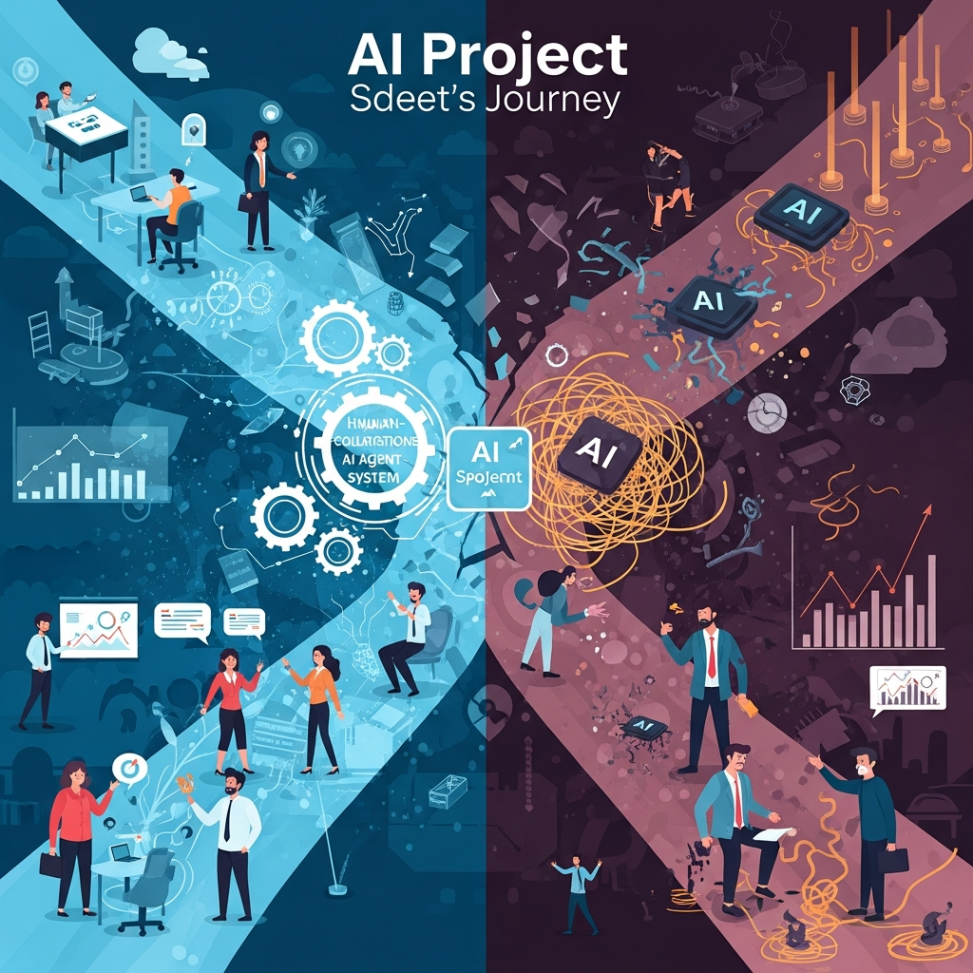
The High Stakes of AI: Why So Many Projects Fail
In the rapidly evolving landscape of artificial intelligence, businesses are eager to harness the power of AI agents to drive innovation, efficiency, and competitive advantage. However, the path to successful AI implementation is fraught with challenges. According to analysts at Gartner, a staggering 60 percent of enterprise AI projects started in 2026 will be abandoned because of data that isn’t “AI-ready.” This alarming statistic highlights a crucial truth: the promise of AI can quickly turn into a costly endeavor if common pitfalls are not proactively addressed.
Ignoring these fundamental issues can lead to wasted resources, missed opportunities, and ultimately, millions in lost investment. But what exactly are these critical missteps? Let’s dive into the five AI agent mistakes that businesses must avoid to safeguard their future and ensure their AI initiatives deliver real value.
1. The Data Dilemma: Is Your Data Truly AI-Ready?
The foundation of any effective AI agent is robust, high-quality data. Without ‘AI-ready’ data, even the most sophisticated algorithms are set up for failure. This isn’t just about having data; it’s about having the right data in the right format, with the right quality.
Common Data-Related Pitfalls:
- Poor Data Quality: Inaccurate, incomplete, or inconsistent data leads to biased or unreliable AI agent outputs.
- Lack of Data Integration: Siloed data across different systems makes it impossible for AI agents to get a holistic view.
- Insufficient Data Volume & Variety: Many AI models require vast amounts of diverse data to learn effectively and generalize well.
- Data Governance Gaps: Without clear policies for data collection, storage, privacy, and access, compliance risks soar, and trust erodes.
- Untagged or Unstructured Data: Much of the world’s data is unstructured, requiring significant effort to clean, label, and prepare for AI consumption.
The Fix: Invest in comprehensive data strategy, quality management, and robust data pipelines. Prioritize data cleansing, labeling, and establishing strong data governance frameworks early in your AI journey.
2. Losing Sight of the ‘Why’: Lack of Clear Business Objectives
Many organizations leap into AI development without a clear understanding of the specific problems they’re trying to solve or the value they expect to generate. Building an AI agent just because ‘everyone else is’ is a recipe for disaster.
Why a Lack of Strategy is Costly:
- Undefined ROI: Without measurable objectives, it’s impossible to track the success or failure of an AI initiative.
- Misaligned Development: Teams build solutions that don’t address critical business needs, leading to wasted effort and resources.
- Scope Creep & Feature Bloat: Without a guiding vision, projects can expand uncontrollably, delaying deployment and increasing costs.
- Lack of User Adoption: If an AI agent doesn’t solve a real problem for its intended users, it will simply gather dust.
The Fix: Start with the business problem, not the technology. Define clear, measurable goals for your AI agents and align them with overarching business strategy. Engage stakeholders from across the organization to ensure relevance and buy-in.
3. The Ethical Blind Spot: Ignoring Governance and Bias
The power of AI agents comes with immense responsibility. Neglecting ethical considerations, fairness, and transparency can lead to significant reputational damage, legal challenges, and a loss of public trust.
Ethical and Governance Oversights:
- Algorithmic Bias: If training data reflects existing societal biases, the AI agent will perpetuate and even amplify them.
- Lack of Transparency: The ‘black box’ nature of some AI models can make it difficult to understand their decisions, hindering accountability.
- Privacy Concerns: AI agents often process sensitive personal data, making robust data protection and privacy measures crucial.
- Regulatory Non-Compliance: Failure to adhere to evolving AI regulations (like GDPR, AI Act, etc.) can result in hefty fines.
- Absence of Human Oversight: Over-reliance on automation without human review can lead to unchecked errors or harmful outcomes.
The Fix: Implement responsible AI principles. Establish clear ethical guidelines, conduct regular bias audits, prioritize explainable AI (XAI) techniques, and build human-in-the-loop systems for critical decisions.
4. Underestimating the Human Factor: Neglecting Collaboration & Adoption
AI agents are tools designed to augment human capabilities, not replace them entirely without proper integration. Overlooking the human element—from development to deployment and ongoing use—is a common and costly mistake.
Human-Related Challenges:
- Resistance to Change: Employees may fear job displacement or distrust new AI systems, leading to low adoption rates.
- Skill Gaps: Organizations may lack the internal talent to develop, deploy, and maintain advanced AI agents.
- Poor User Experience (UX): An AI agent that’s difficult to use or integrate into existing workflows will be abandoned.
- Lack of Human-AI Teaming: Failing to design systems that facilitate effective collaboration between humans and AI can lead to inefficiencies and errors.
The Fix: Foster a culture of AI literacy and collaboration. Invest in upskilling your workforce, involve end-users in the design process, and create intuitive interfaces. Design AI agents as co-pilots, enhancing human decision-making rather than fully automating it.
5. Scaling Scramble: Inadequate Infrastructure & MLOps
Developing a proof-of-concept AI agent is one thing; scaling it to production, maintaining its performance, and managing its lifecycle is another entirely. Many businesses underestimate the robust infrastructure and operational practices required for enterprise-grade AI.
Infrastructure & MLOps Pitfalls:
- Inadequate Compute Resources: Insufficient processing power or storage can bottleneck performance and increase costs.
- Lack of MLOps Practices: Without streamlined processes for model deployment, monitoring, versioning, and retraining, AI agents become unstable and difficult to manage.
- Security Vulnerabilities: Production AI systems are prime targets for cyberattacks, requiring stringent security measures.
- Cost Overruns: Poor resource allocation, inefficient model design, or lack of cost monitoring can lead to exorbitant cloud bills.
- Integration Challenges: Difficulty integrating new AI agents with existing enterprise systems can create silos and operational friction.
The Fix: Plan for scalability from day one. Implement mature MLOps strategies, leverage cloud-native AI services, prioritize robust security, and continually monitor infrastructure costs and model performance.
Ensure Your AI Agents Drive Success, Not Debt
The promise of AI agents is transformative, but realizing that potential requires careful planning and a deep understanding of common pitfalls. The Gartner statistic serves as a stark warning: ignoring data readiness, strategic alignment, ethical considerations, human factors, and robust MLOps can cost businesses millions and derail their AI ambitions.
By proactively addressing these five critical mistakes, businesses can build resilient, impactful AI agents that truly augment human capabilities, solve real-world problems, and drive sustainable growth. Don’t let your enterprise be part of the 60% – empower your AI journey with foresight and strategic execution.
Leave a Reply