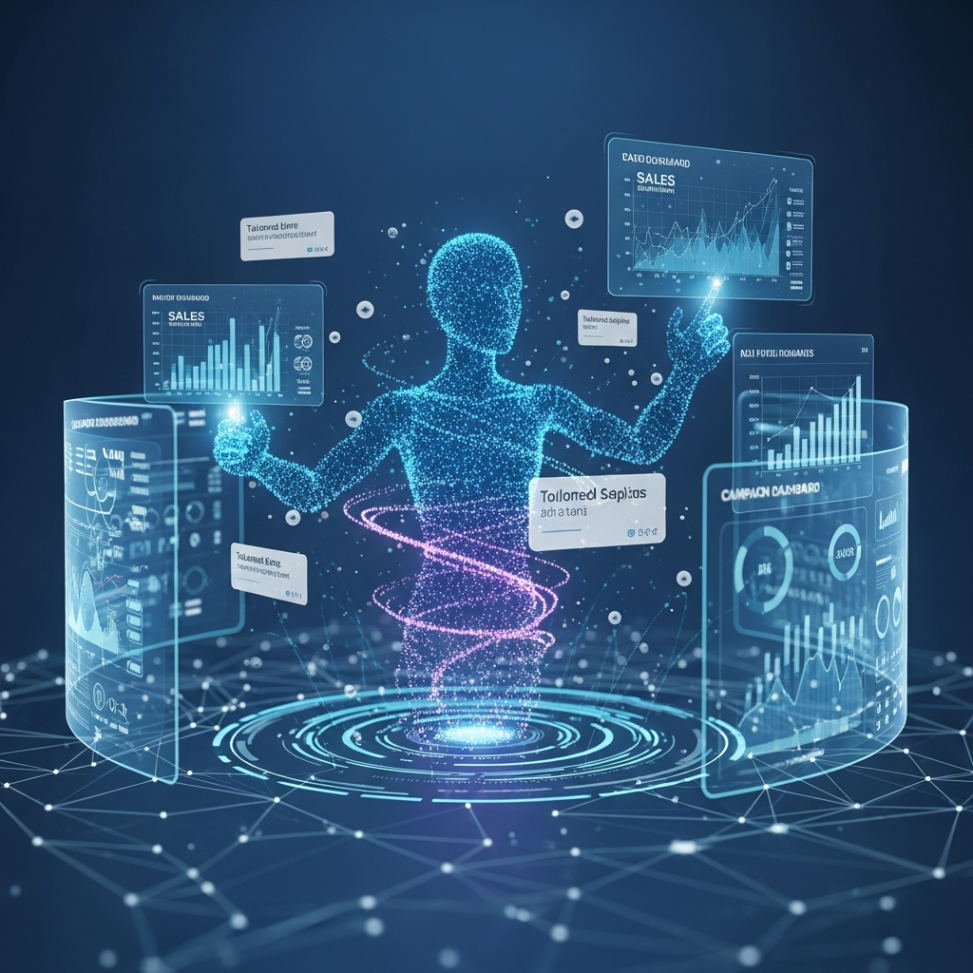
The Rise of AI Agents in B2B Marketing: Not Hype, But Reality
The landscape of B2B marketing is undergoing a seismic shift, and the driving force? Artificial Intelligence agents. According to a compelling forecast by Gartner, a staggering 40% of enterprise applications are projected to incorporate task-specific AI agents by the close of 2026. This is a monumental leap from less than 5% in 2025, signaling not just a trend, but a fundamental evolution in how businesses operate and market.
This isn’t just about buzzwords; it’s about practical, autonomous entities designed to enhance efficiency, personalize interactions, and drive unprecedented results. But what exactly are these AI agents, and how will they specifically reshape B2B marketing strategies over the next few years?
What Are AI Agents?
At their core, AI agents are intelligent software programs designed to perceive their environment, make decisions, and take actions autonomously to achieve specific goals. Unlike traditional automation, which follows predefined rules, AI agents can learn, adapt, and operate with a degree of independence, making them incredibly powerful tools for complex, dynamic tasks.
In B2B marketing, this means moving beyond simple chatbots or basic automation workflows. We’re talking about systems that can analyze market trends, predict customer behavior, generate tailored content, and even optimize entire campaigns without constant human oversight.
5 Ways AI Agents Will Transform B2B Marketing by 2026
As enterprises rapidly integrate AI agents, their impact on B2B marketing will be profound. Here are five key areas where these intelligent entities are set to revolutionize how businesses connect with their clients:
1. Hyper-Personalization at Scale
Traditional B2B personalization often involves segmenting audiences and crafting messaging for groups. AI agents take this to an entirely new level. By continuously analyzing vast datasets—including firmographics, technographics, behavioral patterns, purchase history, and real-time interactions—agents can:
- Deliver unique content and product recommendations tailored to individual company needs.
- Craft personalized email sequences, website experiences, and ad creatives for each prospect.
- Identify the optimal time and channel for communication, ensuring maximum relevance and impact.
This level of precision ensures that every touchpoint feels bespoke, significantly increasing engagement and conversion rates.
2. Intelligent Lead Qualification & Nurturing
Sifting through leads and nurturing them effectively is time-consuming. AI agents can streamline this crucial process:
- Automated Lead Scoring: Agents can analyze a multitude of data points to score leads with far greater accuracy than manual methods, identifying those most likely to convert.
- Proactive Engagement: Deploy intelligent chatbots or email agents to engage leads, answer common questions, qualify their needs, and provide relevant information, freeing up human sales teams for high-value interactions.
- Dynamic Nurturing Paths: Based on a lead’s real-time behavior and engagement, agents can dynamically adjust nurturing campaigns, serving up the right content at the right moment.
The result is a more efficient sales funnel, with sales teams focusing on genuinely hot prospects.
3. Dynamic Content Creation & Optimization
Content is king, but creating and optimizing it at scale is a constant challenge. AI agents are becoming powerful content collaborators:
- Automated Content Generation: From drafting blog post outlines and social media updates to generating personalized ad copy and email subject lines, AI agents can produce high-quality content quickly.
- Performance-Driven Optimization: Agents can A/B test countless variations of content elements (headlines, CTAs, images) in real-time, learning what resonates best with specific audiences and automatically implementing the most effective versions.
- Content Gap Analysis: Identify missing content topics or formats that prospects are searching for, helping marketers fill strategic gaps.
This capability ensures that B2B brands maintain a consistent, optimized, and highly relevant content presence.
4. Automated Campaign Management & ROI Optimization
Managing complex B2B campaigns across multiple channels can be overwhelming. AI agents excel at autonomous optimization:
- Real-time Budget Allocation: Agents can monitor campaign performance metrics across various platforms (social, search, display) and dynamically reallocate budgets to channels and ads that are generating the highest ROI.
- Predictive Bidding Strategies: Utilizing historical data and real-time market signals, AI agents can execute sophisticated bidding strategies to maximize visibility and conversions within budget constraints.
- Audience Refinement: Continuously analyze audience performance to refine targeting parameters, identifying new high-performing segments or excluding underperforming ones.
This level of automation ensures campaigns are always performing at their peak, delivering measurable improvements in marketing efficiency.
5. Proactive Customer Engagement & Support
While often seen as a customer service function, proactive engagement is a critical aspect of B2B marketing and retention. AI agents can enhance this by:
- Predictive Problem Solving: Identifying potential issues or questions before they arise by monitoring client usage patterns and sentiment, allowing for proactive outreach.
- Personalized Onboarding & Training: Guiding new clients through product setup and usage with tailored, interactive support modules.
- Feedback Collection & Analysis: Systematically gathering and analyzing customer feedback to identify areas for product improvement or new service offerings, which feeds directly back into marketing strategy.
By offering superior, proactive support, B2B companies can build stronger relationships, reduce churn, and turn satisfied clients into powerful advocates.
The Road Ahead: Embracing AI Agent Transformation
The rapid adoption curve highlighted by Gartner isn’t a distant future; it’s a present reality gaining incredible momentum. For B2B marketers, the integration of AI agents presents an unprecedented opportunity to move beyond manual, repetitive tasks and focus on high-level strategy, creativity, and deeper customer understanding.
Embracing AI agents means unlocking new levels of personalization, efficiency, and effectiveness. It’s about empowering your marketing team to achieve more, understand customers better, and ultimately, drive more significant business growth. The question isn’t whether AI agents will change B2B marketing, but how quickly you’re prepared to integrate them into your strategy.
Leave a Reply