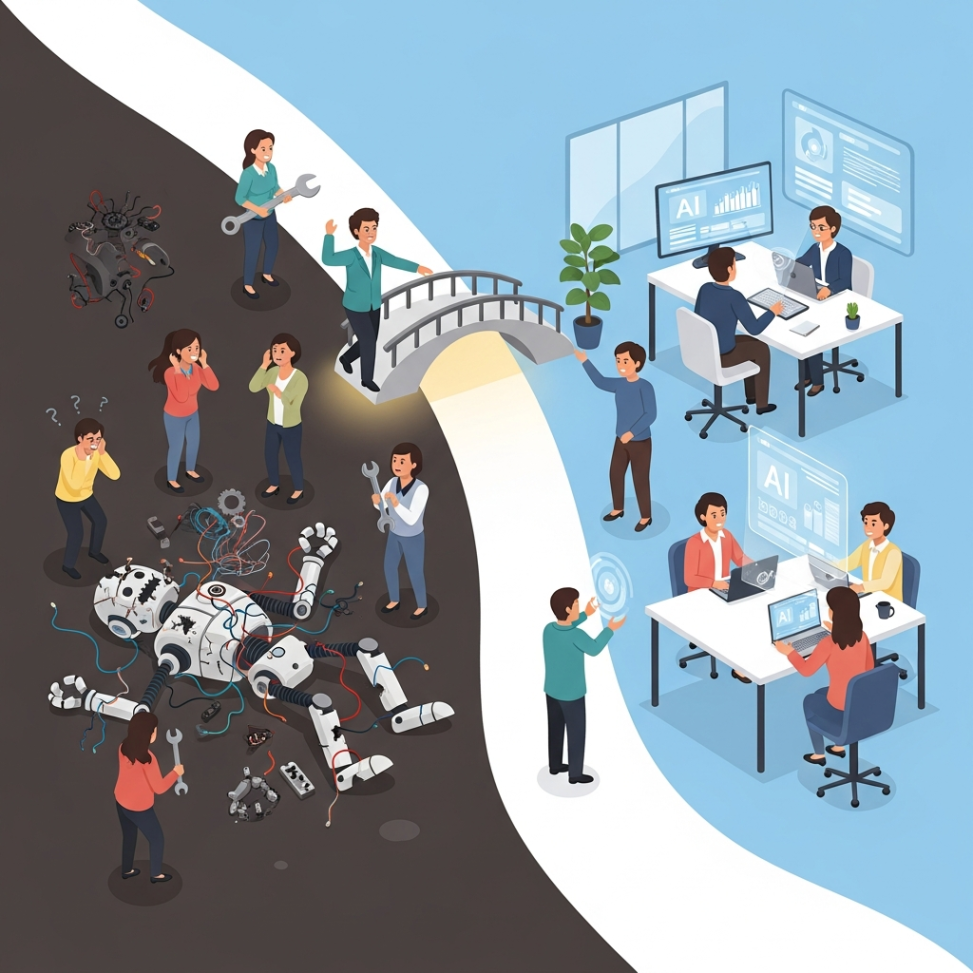
The Harsh Reality: Why So Many AI Projects Fall Short
In the whirlwind of artificial intelligence hype, it’s easy to get swept away by promises of unprecedented efficiency and innovation. Yet, a stark reality often lies beneath the surface. A widely cited report from MIT Technology Review in August 2023 revealed a sobering statistic: as many as 95% of large language model (LLM) pilot projects fail. This isn’t just an enterprise problem; it’s a critical lesson for Small to Medium-sized Businesses (SMBs) eager to harness the power of AI automation.
So, what’s going wrong? And more importantly, how can your SMB avoid becoming another statistic, instead turning AI into a tangible asset?
Common Pitfalls Leading to AI Project Failure
The reasons behind these high failure rates are multifaceted, often stemming from fundamental missteps in strategy and execution:
- Lack of Clear Objectives: Many companies jump into AI without a well-defined problem to solve or a clear understanding of what success looks like. AI is a tool, not a magic wand.
- Poor Data Quality and Availability: AI models are only as good as the data they’re trained on. Inaccurate, incomplete, or siloed data can derail even the most promising initiatives.
- Insufficient Expertise & Resources: Implementing AI requires specialized skills—from data science to machine learning engineering and ethical considerations. SMBs might underestimate the need for in-house talent or expert partnerships.
- Over-Ambition and Scope Creep: Trying to solve too many problems at once or expecting too much too soon often leads to complex, unmanageable projects that never reach completion.
- Ignoring User Adoption & Change Management: Even the most technically brilliant AI solution will fail if employees are resistant to using it or if workflows aren’t adequately adapted.
- Inadequate Infrastructure: AI, especially generative AI, can be compute-intensive. Without the right cloud infrastructure or processing power, projects can become too slow or expensive to scale.
How SMBs Can Turn the Tide: A Blueprint for AI Success
Despite the challenges, SMBs are uniquely positioned to succeed with AI automation. Their agility, close-knit teams, and direct decision-making can be significant advantages. Here’s how to navigate the complexities and achieve real results:
1. Start Small, Think Big: Define Specific, Achievable Goals
Instead of aiming for a revolutionary overhaul, identify a single, high-impact problem that AI can realistically solve. Perhaps it’s automating customer support FAQs, streamlining internal document generation, or optimizing inventory management. A successful small pilot builds confidence, gathers valuable data, and provides a template for future expansion.
2. Prioritize Data Excellence
Before even thinking about AI tools, focus on your data. Clean, organize, and consolidate your existing information. Data quality is paramount. If your data is a mess, your AI will be too. Consider integrating tools that help with data governance and preparation.
3. Leverage External Expertise Wisely
SMBs don’t need a full data science department from day one. Partner with AI consultants, specialized agencies, or utilize AI-as-a-Service (AIaaS) platforms. These can provide the necessary expertise without the overhead of hiring full-time staff, allowing you to learn and grow your internal capabilities over time.
4. Choose the Right Tools for the Job
The AI landscape is vast. Research and select tools and platforms that are specifically designed for SMBs, offer clear integration paths with your existing systems, and provide strong support. Focus on solutions that can scale with your business.
5. Embrace a Phased Implementation & Iteration Mindset
AI projects are rarely a one-and-done deal. Implement in stages, continuously test, gather feedback, and refine your models and processes. Agility is an SMB superpower—use it to adapt quickly to new insights and optimize performance.
6. Foster a Culture of AI Literacy and Adoption
Educate your team about what AI is, how it works, and how it will benefit their roles. Involve key stakeholders from the beginning to ensure buy-in and smooth adoption. Address concerns proactively and highlight the value AI brings to their daily tasks, freeing them for more strategic work.
The Future is Automated, Make it Work for You
The statistic of failed AI projects isn’t a deterrent; it’s a critical learning opportunity. By understanding the common pitfalls and adopting a strategic, data-centric, and user-focused approach, SMBs can successfully integrate AI automation into their operations. The goal isn’t just to implement AI, but to implement it intelligently, transforming your business for sustainable growth and competitive advantage in an increasingly automated world.
Leave a Reply