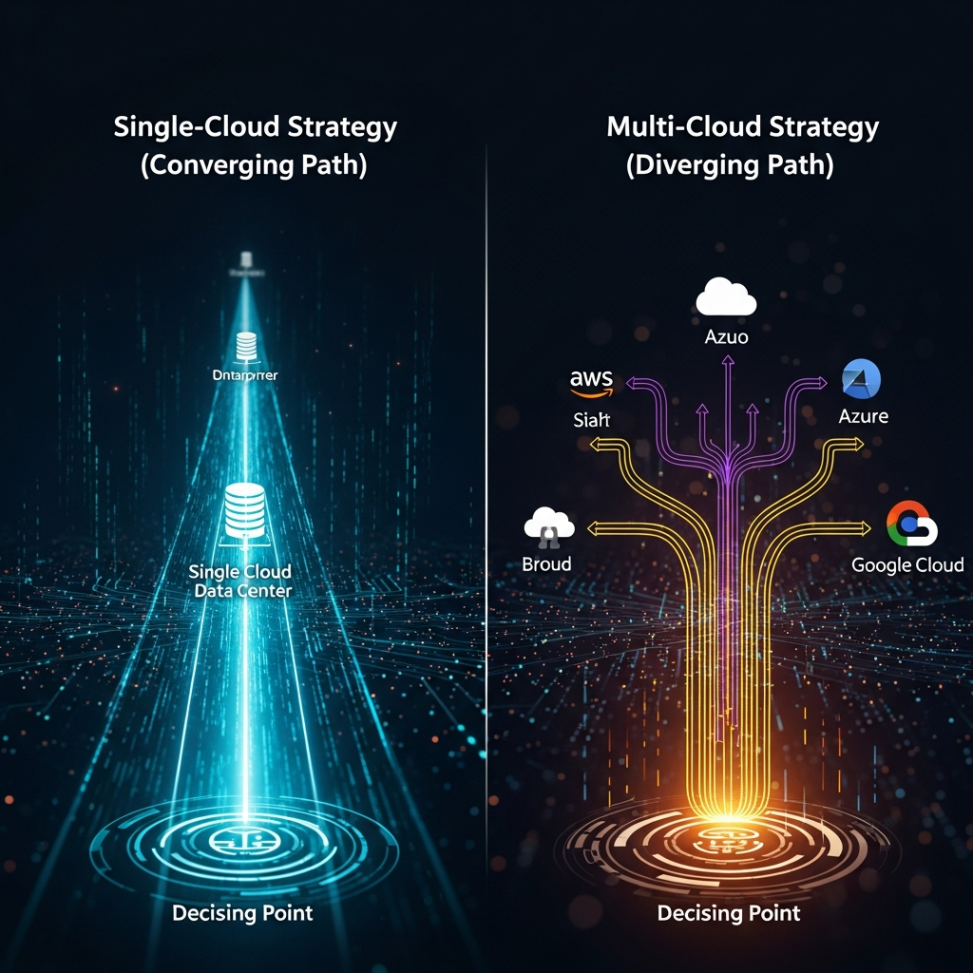
Decoding Your Cloud Strategy: Single-Cloud vs. Multi-Cloud
In today’s fast-paced digital landscape, the cloud is no longer just an option—it’s a foundational pillar for innovation and operational efficiency. But with great power comes a critical decision: should your organization commit to a Single-Cloud provider or embrace a Multi-Cloud approach? This isn’t just a technical choice; it’s a strategic one that directly impacts speed, cost, flexibility, and risk.
For IT leaders, understanding the nuances of each model is paramount. Let’s break down the advantages and considerations to help you chart the best course for your business goals.
The Power of Simplicity: Understanding Single-Cloud
A Single-Cloud strategy involves leveraging services exclusively from one cloud provider, such as Amazon Web Services (AWS), Microsoft Azure, or Google Cloud Platform (GCP). This approach often appeals to organizations prioritizing streamlined operations and cost control.
Key Advantages of a Single-Cloud Approach:
- Simplified Management: Fewer vendors mean less complexity in terms of integration, billing, and support. Your team can focus on mastering a single ecosystem.
- Cost Optimization: Volume discounts and sustained-use pricing often come into play, leading to significant cost savings. Expertise in one platform also reduces operational overhead.
- Faster Deployment: With a unified toolset and consistent architecture, deploying applications and services can be quicker and more efficient.
- Deep Vendor Expertise: Your team can achieve a profound level of expertise in a single cloud provider’s offerings, maximizing the benefits of specialized services and features.
- Stronger Vendor Relationship: A deeper commitment can lead to better support, early access to new features, and more favorable terms.
Ideal for: Startups, small to medium-sized businesses, or enterprises with specific workloads that perfectly fit one provider’s strengths, and those prioritizing rapid scaling within a single environment.
Embracing Agility and Resilience: The Multi-Cloud Paradigm
A Multi-Cloud strategy involves using two or more public cloud services from different providers. This approach is gaining traction among larger enterprises and organizations with diverse, complex requirements.
Key Advantages of a Multi-Cloud Approach:
- Vendor Lock-in Avoidance: By distributing workloads across multiple providers, organizations reduce their reliance on a single vendor, mitigating potential price increases or unfavorable terms.
- Enhanced Resilience and Disaster Recovery: If one cloud provider experiences an outage, workloads can be seamlessly shifted to another, ensuring business continuity and minimizing downtime.
- Best-of-Breed Services: Different cloud providers excel in different areas (e.g., AI/ML, analytics, serverless). Multi-cloud allows you to pick the best service for each specific workload.
- Geographic Reach & Latency: Leverage data centers closer to your end-users globally, reducing latency and improving application performance.
- Regulatory Compliance: Certain industries or regions may have specific data residency or compliance requirements that can be met more effectively by combining providers.
Ideal for: Enterprises with stringent compliance needs, high availability demands, diverse application portfolios, or a strategic desire to avoid vendor dependence.
Making the Right Choice: Key Considerations for IT Leaders
The decision isn’t one-size-fits-all. Your optimal cloud strategy hinges on a careful evaluation of several factors:
- Business Objectives: What are your primary goals? Is it cost reduction, rapid innovation, extreme resilience, or global expansion?
- Budget & Cost Management: While single-cloud can offer simplicity, multi-cloud can introduce complexity in cost tracking. Understand the Total Cost of Ownership (TCO) for both models.
- Security & Compliance: Evaluate the specific security requirements and regulatory mandates your organization faces. Each cloud provider has different compliance certifications and security features.
- Team Expertise & Resources: Does your IT team have the skills to manage multiple cloud environments, or is it better to specialize? Consider the investment in training and tools.
- Workload Characteristics: Are your applications monolithic or microservices-based? Do they require specific hardware or software features only available from one provider?
- Data Gravity: Where does your data reside? Moving large datasets between clouds can be expensive and time-consuming.
The Path Forward: Strategic Alignment is Key
Ultimately, the choice between Single-Cloud and Multi-Cloud isn’t about choosing a winner, but about aligning your cloud strategy with your overarching business objectives. A thoughtful, strategic approach will consider your current infrastructure, future growth plans, risk tolerance, and available resources.
Whether you opt for the focused efficiency of a Single-Cloud or the robust flexibility of a Multi-Cloud environment, making an informed decision today will lay a resilient foundation for your digital future.
Leave a Reply